Technical Insights

Table of Content
Article Information
- Published Date: 2021-03-02
- Revised Date: 2025-12-27
What is UV printing?
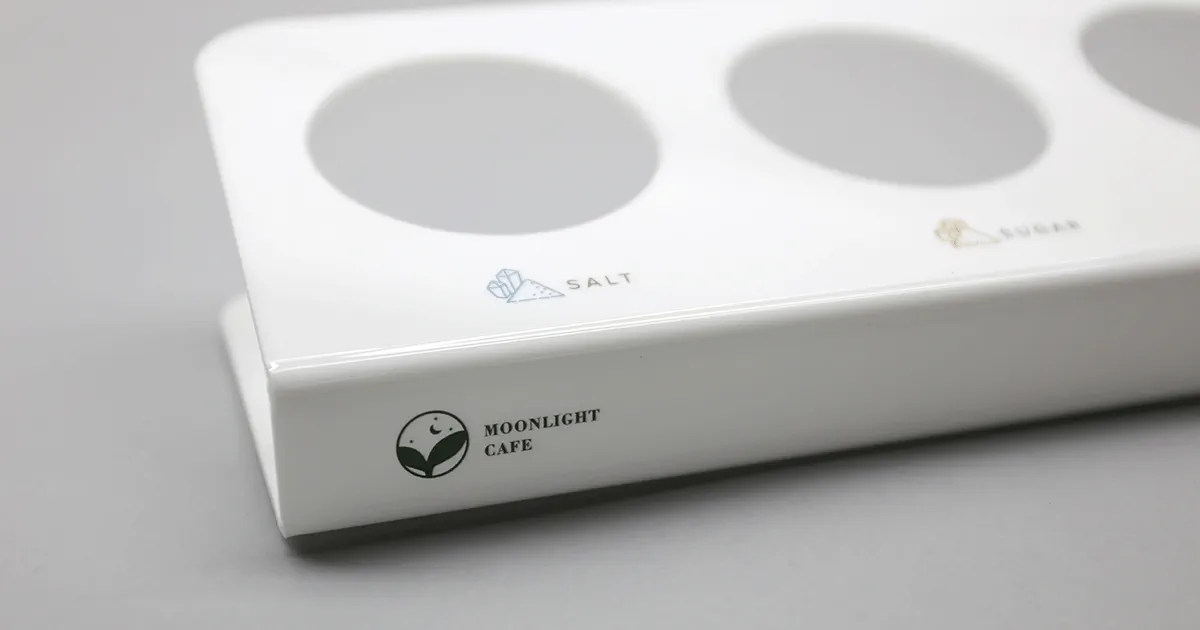
What is UV printing?
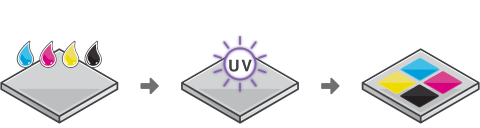
UV Print is a digital printing method that uses ultraviolet light to instantly cure ink on the surface of materials. Unlike screen printing, UV print can print full color—whether it's photos, Pantone colors, logos, partial white ink, or spot varnish. It can print graphics directly from the computer onto acrylic, metal, glass, and many other rigid materials. Since there's no need for making screens or plates, UV printing saves both time and cost while enabling small-batch production with fast turnaround.
At Siam P&W Technic, we've been providing professional UV flatbed printing services since 2017. With two Docan H1000 UV printers, we focus on delivering exceptional print quality, accurate color reproduction using ONYX RIP software and X-Rite i1 Pro calibration, and strong material adhesion. Our UV-cured prints maintain vibrant colors for at least 3 years outdoors, making them ideal for signage, interior decoration, and custom products.
What is digital printing?
Digital printing is the most widely used printing method today. It can print directly from digital graphics. In contrast, the traditional printing method needs to make printing plates before printing, and the ink takes a long time to dry, so the lead time is longer. The printing plate requires one color per plate, and the colors are toned manually. Therefore, the colors are more likely to be misaligned. It is more suitable for mass printing on paper due to the complicated process. Also, the printing plate needs to be washed after printing, and the ink often causes environmental pollution.
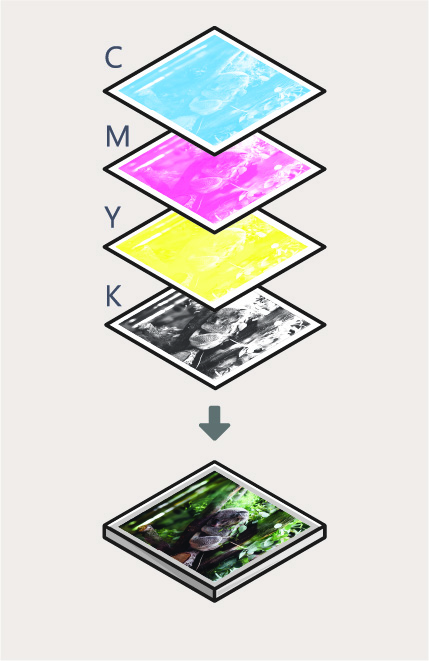
Traditional Printing
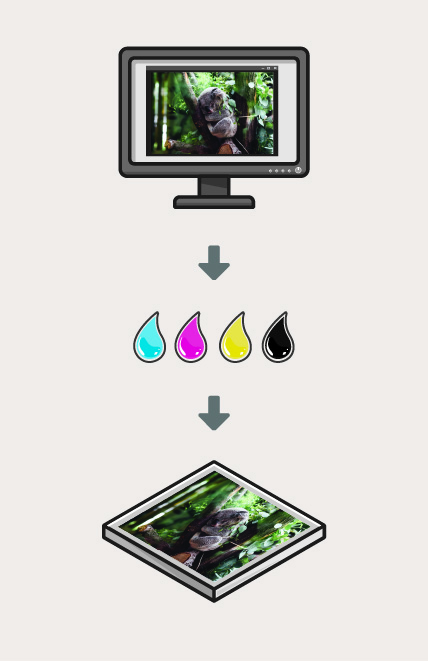
Digital Printing
Digital printing does not require a lot of workers or time. It can print digital graphics directly onto the materials, fast and accurately. It does not need to make a printing plate, so the lead time is shorter. Digital printing can print small quantities and not only on paper; there are many types of materials that are printable. Also, the colors are not limited by the printing plates; the color gamut that is printable is wider, and the gradient color is more detailed. The ink for digital printing is more environmentally friendly. Digital printing is more customizable and can print relief effects.
Is UV printing the same as inkjet printing?
Different from UV printing, inkjet printing is a widely used digital printing equipment. Although the operation is similar, the ink of an inkjet printer must be absorbed by the material and then air-dried. While UV printing uses ultraviolet light to cure ink on the surface of the material. Therefore, inkjet and UV printing can be applied to different areas. UV printing can be printed on acrylic, glass, metal, leather, etc., which can make products like signboards, interior decoration, packaging boxes, etc.
Unlike inkjet printing, the best advantage of UV printing is the color accuracy and exceptional outdoor durability—UV prints will not fade or change color for at least 3 years outdoors. The inkjet printer uses solvent inks, non-solvent inks, or water-based inks, which are not suitable for outdoor usage and often start fading in less than a year. This makes UV printing the superior choice for outdoor signage, architectural applications, and any products exposed to sunlight and weather.
What is “flat-bed”, and “roll-to-roll”?
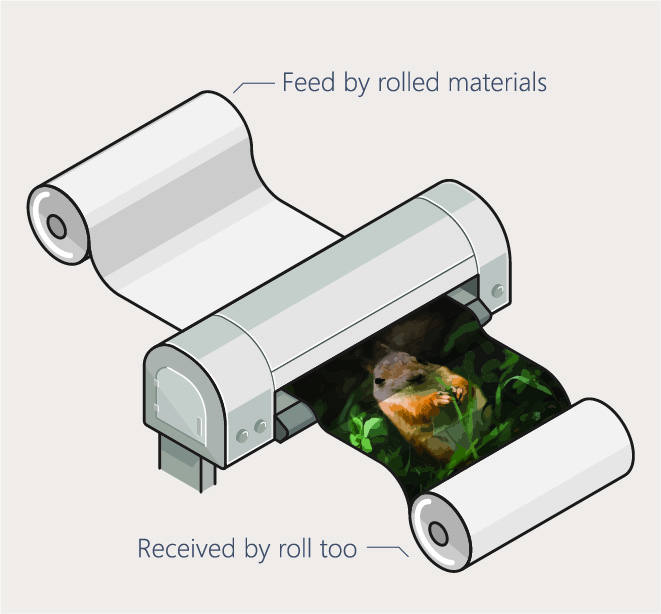
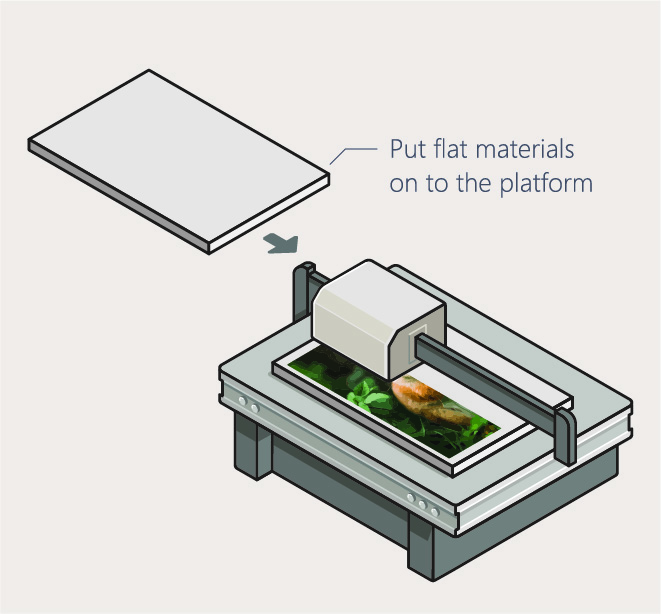
Flat-bed is a type of printer that has a platform, which can put flat materials onto the platform for printing. A roll-to-roll type printer is different; it can automatically feed the rolled materials, and then receives the material in rolls too. The roll-to-roll model is better for printing flexible materials in large quantities and at a fast speed. Siam P&W Technic uses a flat-bed printer, so it cannot work with large-format paper or canvas.
Comparison with other printing methods
Comparison with hot stamp
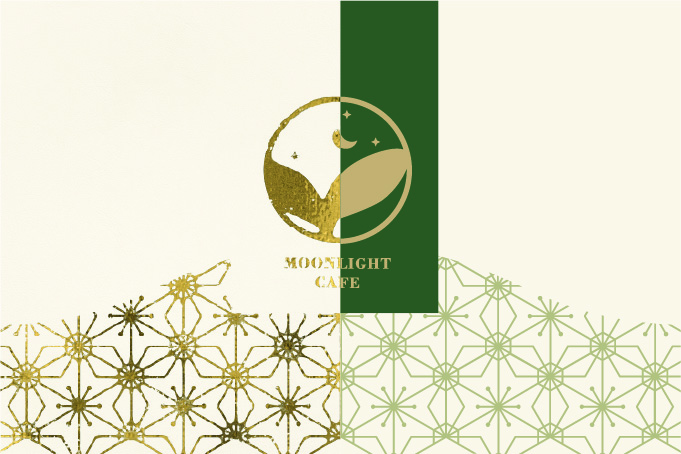
Hot stamp can only print one color at a time, and the colors are limited to the colors that the printing company can provide. UV printing does not have a limit in color but cannot print metal colors. Hot stamp is not good at working on small details, while UV printing can print the details.
Comparison with screen printing
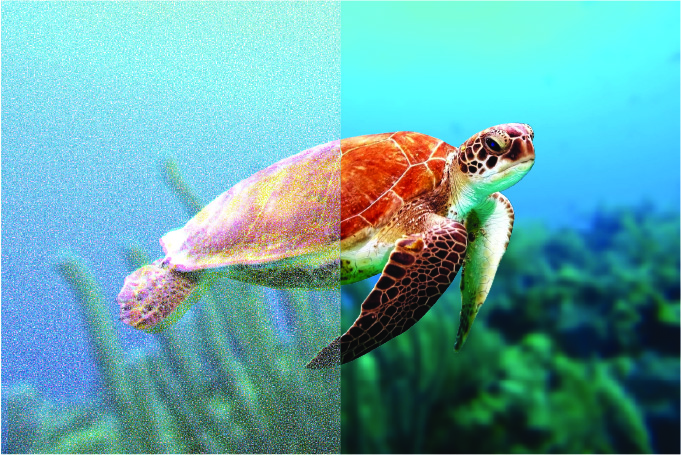
Screen printing makes printing plates on screens, by blocking the parts that do not need to be printed, and letting the ink go through the screen. The advantage of screen printing is that it can print special colors. But it needs to print in large quantities due to the screen. Screen printing uses ink that needs time to dry, but UV printing dries the ink immediately. Both printing methods can create spot varnish.
Comparison with inkjet printing
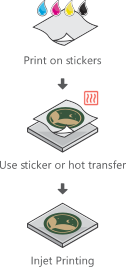
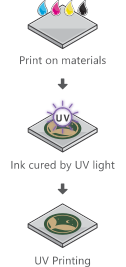
Inkjet printing cannot print on non-absorbent textures, so it needs to use stickers or heat transfer to put the image onto the materials. Meanwhile, UV printing can print directly onto the material. Also, inkjet ink does not have white ink, so it will be a problem when printing on darker paper. UV printing has white ink, so it can print on materials with any color.
Application of UV printing and features of Siam P&W Technic
6-colors printing
UV printing does not need to make a printing plate. It can print the graphics directly onto the surface of the material. Therefore, UV printing is fast, highly customized, and has low yield.
UV printing can print full color, most of the Pantone colors, partial white ink, and spot varnish.
Principles of Printing
Color
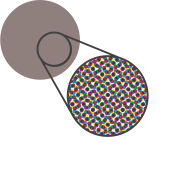
The colors are printed by small dots.
Dark Color
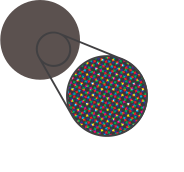
The spacing of dots is smaller.
Light Color
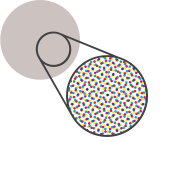
The spacing of dots is more loose.
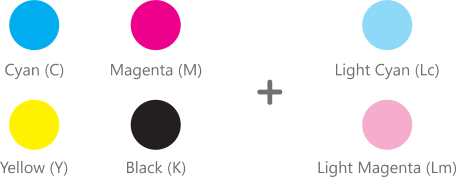
Most of the printers use a four-color process (CMYK), while Siam P&W Technic uses a six-color process, which has additional light blue (Lc) and light red (Lm), the benefit is to create a smoother gradient. In other words, light colors such as pinks become more saturated and skin tones become more reddish.
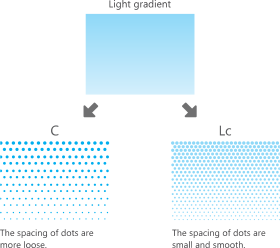
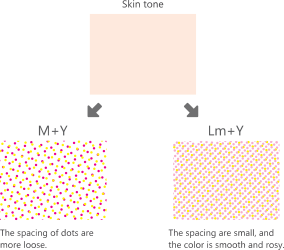
The colors are printed by small dots. The darkness of a color is produced by using the (visual) illusion, which uses the “dot size” and the distance between “dots”. For example, if we use a blue (dark) to print light blue, then the dots need a larger spacing to show a light blue. If we use light blue ink, the spacing will be small, and the color will look smooth and the dots are fine.
Pantone colors
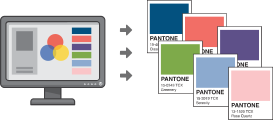
Siam P&W Technic uses the latest version of ONYX printing software (RIP) to manage colors, so we can print Pantone spot colors more accurately. Pantone spot colors use six-color simulation, with a coverage rate of about 84%.
Printing white ink
UV print can print partial white ink, which is one of its most valuable features. It can be printed directly onto transparent materials like acrylic and glass, or used as an underbase on dark-colored materials to make colors pop with full vibrancy.
At Siam P&W Technic, approximately 90% of our UV printing projects utilize white ink—whether as an underbase for transparent acrylic, a foundation for printing on dark metals, or even white-only printing for specific design effects. This capability sets UV printing apart from standard inkjet printing and makes it ideal for creative applications.

Added white ink below the image
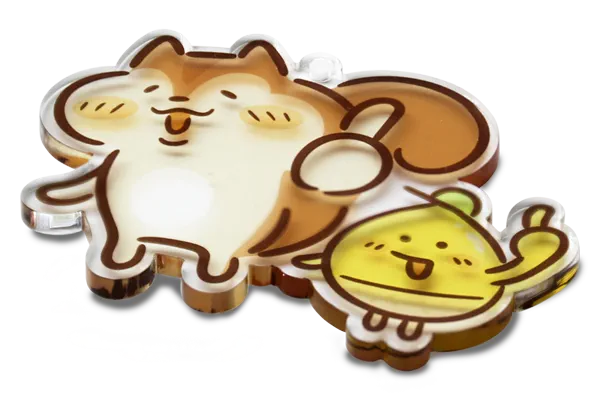
Without white ink
Printing spot varnish
Traditionally, spot varnish needs to be produced through screen printing, which requires an additional process after printing. But UV printing provides clear varnish ink that can be applied immediately after printing the graphics in a single pass. The varnish can be added to the whole surface for full protection, or selectively applied to create spot varnish effects—adding dimension, texture, and visual interest to your prints.
Without clear ink

Clear ink added at the outline
Why choose Siam P&W Technic for UV printing?
Advanced color management
We use the latest ONYX RIP software combined with X-Rite i1 Pro spectrophotometer for precise color calibration. This ensures accurate Pantone color matching with approximately 84% coverage using our six-color printing system. Every job starts with proper color calibration to maintain consistency and quality.
Complete in-house capabilities
Beyond UV printing, we offer laser cutting, CNC routing, and edge polishing services all under one roof. This means you can get complete fabrication solutions—from printing to cutting to finishing—without coordinating between multiple vendors. The result is faster turnaround, better quality control, and seamless integration of different processes for complex projects.
Material versatility with expert guidance
Our two Docan H1000 UV printers can handle materials up to 100mm thick and print areas as large as 1200 × 2400mm. We work with acrylic, metal, glass, wood, leather (PU), and many other rigid materials. While we can print on most rigid substrates, some materials require special considerations—for example, reflective materials, glass, and certain plastics (PP/PC) may need special handling due to adhesion properties or electrostatic discharge. We're happy to provide material consultation and testing to ensure the best results for your specific application.
Quality you can count on
With professional UV printing experience since 2017, we focus on three key areas: exceptional print quality (up to 726×1440 dpi resolution), accurate color reproduction, and strong material adhesion. Our prints are rated for at least 3 years of outdoor durability, backed by our use of Taiwan eco-friendly, low-VOC UV-curable inks and LED UV curing technology.