Technical Insights

Table of Content
Article Information
- Published Date: 2021-03-08
- Revised Date: 2025-07-12
What is laser engraving?
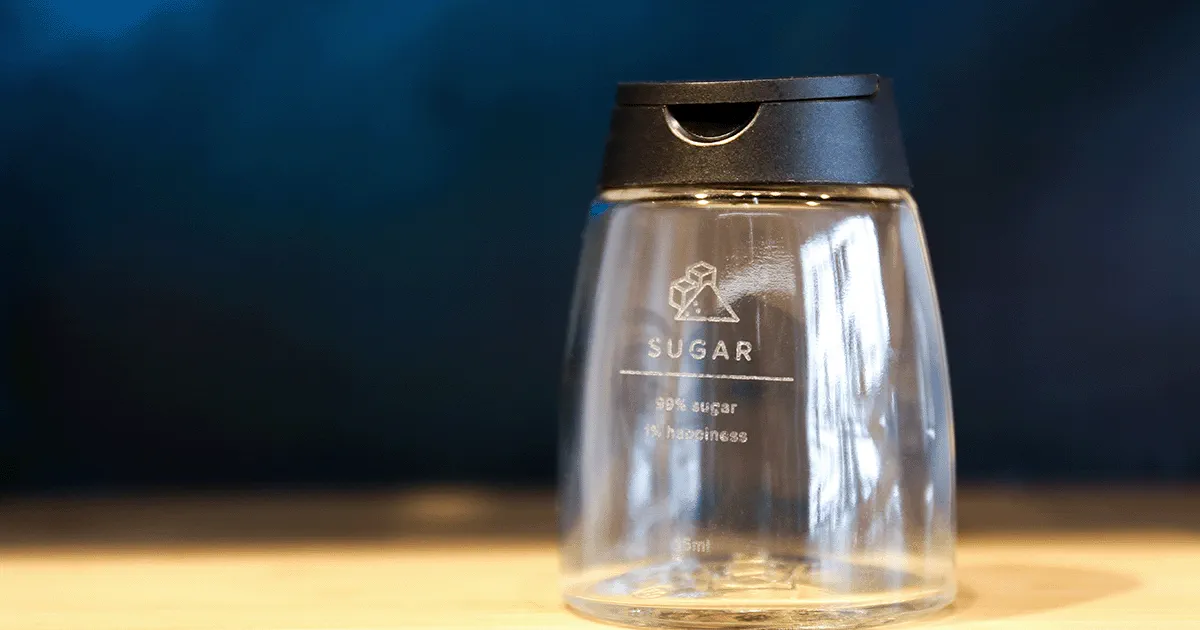
What is laser engraving?
Laser engraving works by burning the surface of material with a laser beam, and the color of the material will change. It can also be engraved in different brightnesses. The laser can engrave non-metallic materials, such as acrylic, wood, leather, etc., and could be applied to many industries. For example, in the advertising industry, laser engraving can be used for making badges, door signs, and signage. In the apparel industry, it can engrave a logo or pattern on leather. Last, in publishing, it can engrave cardboard for books, packaging, or paper models.
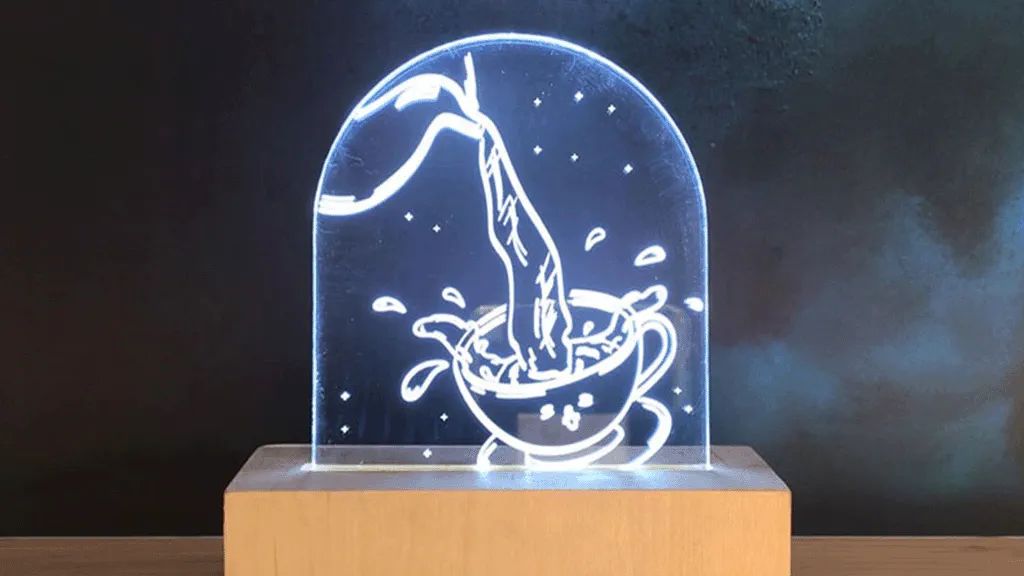
What is laser marking?
Laser marking makes the surface of material melt, oxidize, peel, or change color by a high-focused laser beam. It is used for marking small letters or graphics. It is fast, accurate, and of high quality. Laser marking can be applied to many industries, like electric, medical, advertising, and art. It is mostly used for marking labels, serial numbers, barcodes, or QR codes.
Fiber laser
Fiber laser is for cutting metal. The frequency is 1,064nm, which is easy to be absorbed by metal, and it can cut iron, aluminum, brass, etc. Fiber laser can heat and oxidize the surface of metal, which will make the metal turn black.
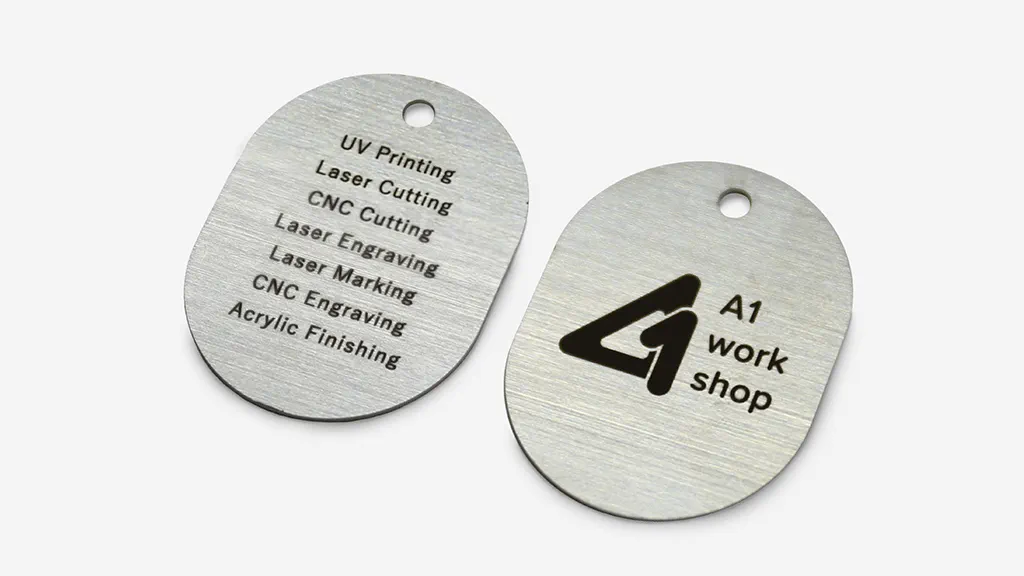
CO2 laser
CO2 Laser is for non-metal materials. The frequency is 10,640nm, which is easy to be absorbed by organic materials. Therefore, it is better for cutting non-metals, such as acrylic, wood, leather, rubber, etc. It can be applied to medical packaging, cloth, craft, furniture, etc.
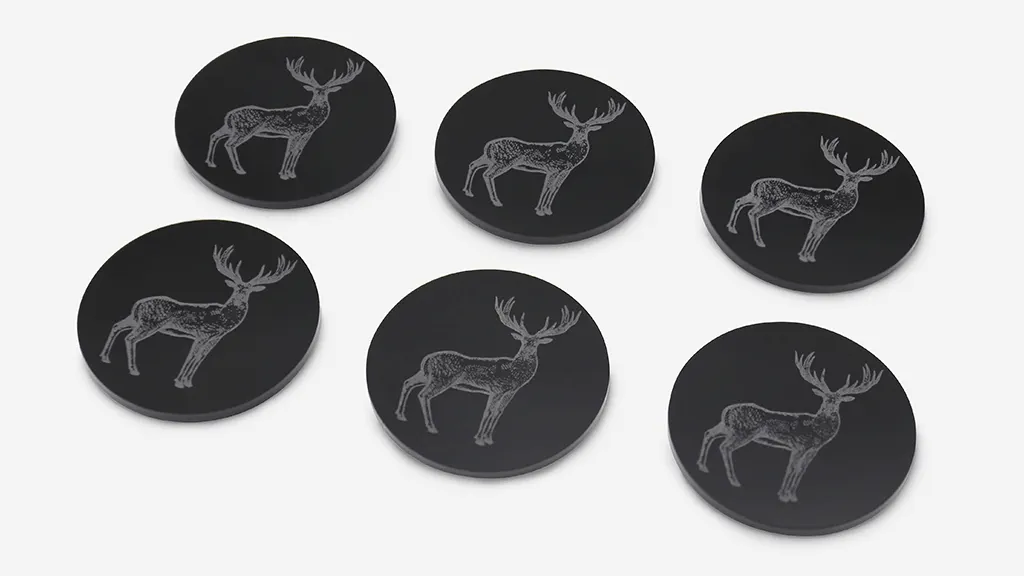
3D Marking
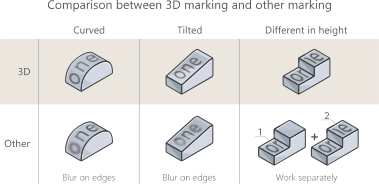
The 3D technique can be used on a curved or tilted surface.

3D Marking Machine has sensors, which can scan, position, and detect the curved surface, then mark the image or letter along the surface.

Another way is using 3D software to draw the object and image first, and then marking.
Other marking machines cannot recognize the curved or tilted surface. So, the two sides of the image will be blurred or lighter, and the center will be clear. When working with the object that has a difference in height, 3D Marking can auto-focus on different heights and mark the graphic on the object. Other marking machines do not have auto-focus, so they must mark separately for different heights.
What is CNC Engraving?
Laser engraving works by burning the surface of material with a laser beam, and the color of the material will change. It can also engrave in different brightnesses. The laser can engrave non-metallic materials, such as acrylic, wood, leather, etc., and could be applied to many industries. For example, in the advertising industry, laser engraving can be used for making badges, door signs, and signage. In the apparel industry, it can engrave a logo or pattern on leather. Last, in publishing, it can engrave cardboard for books, packaging, or paper models.
Difference between laser engraving and CNC engraving
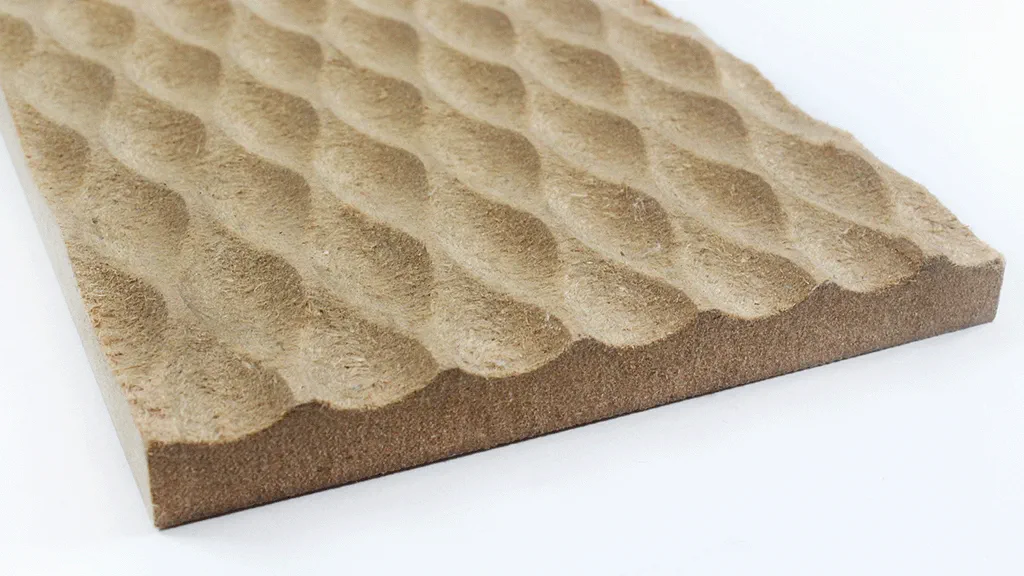
Laser engraving and CNC engraving are for non-metallic materials. CNC engraving can engrave the board into a 3D model, including curved and tilted surfaces. Laser engraving can engrave different brightnesses, but the material will change color because of the laser beam. Usually, laser is used to engrave text on labels, while CNC is used to engrave patterns.
Laser Engraving
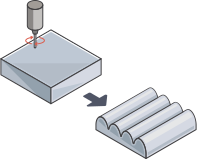
CNC Engraving
Difference between laser engraving and laser marking
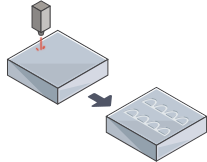
Laser engraving is different from laser marking. Laser engraving uses an X-Y table, and laser marking uses an oscillating mirror. In the X-Y table, the laser beam goes down vertically, then the laser head will move to control the position. The speed is slower, but better for engraving deeper. For the oscillating mirror, the laser beam splashes down like a triangle and the speed is fast. However, the mark will become tilted toward the side, so it is better for marking small areas.
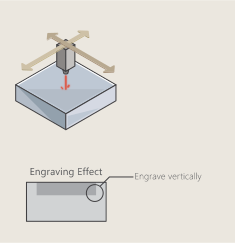
Laser Engraving
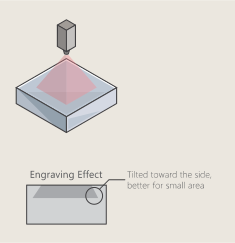
Laser Marking
Features of Siam P&W Technic
Siam P&W Technic has various engraving and marking machines, which can choose the best way according to the material, size, or effect.
Laser Engraving
For non-metals, it can do basic engraving, also engrave different brightnesses.
Laser Marking
For metals and non-metals, it can mark colors on metals, and mark on the surface that is not flat.
CNC Engraving
For non-metals, and focuses on engraving curved surfaces, tilted surfaces, or other 3D shapes.